With courts barely functioning, a defamation decree threatens one of the few sources of public accountability.
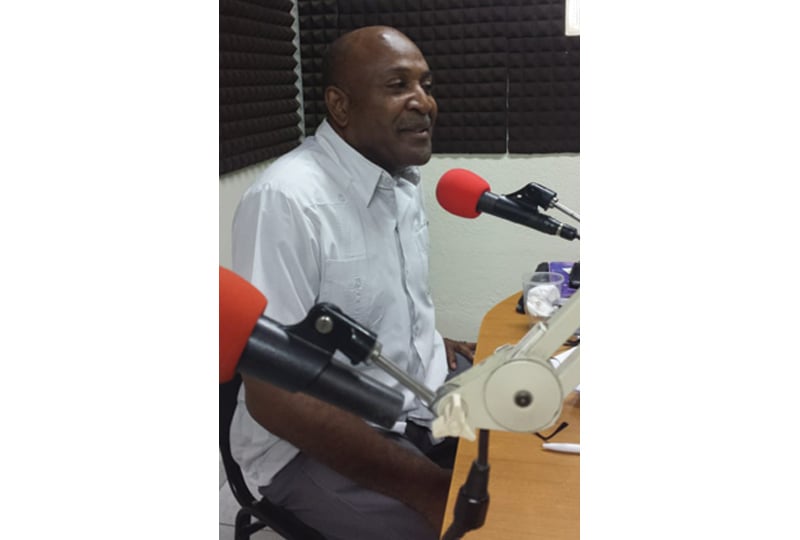
When I started out as a journalist under the dictatorship of Jean-Claude Duvalier, the risks of the profession were clear. If you went too far in exposing the regime’s failures and abuses, agents of the state could arrest, imprison, and torture you.
In recent years, the risks have multiplied kaleidoscopically. As gangs gained power and some developed ties to political and business leaders, many more topics became dangerous for journalists to cover, and physical violence against reporters could emerge from anywhere.
Now, on top of the physical danger, journalists face a new legal jeopardy. In December, the transition government published a decree on defamation that threatens steep fines and up to three years in prison for people who “insult public officials” or “spread false news,” with very little clarification or limitation of those definitions. Journalists got the message: Reporting on government officials’ wrongdoing could lead to fines and imprisonment.
Certain lines of reporting among Haitian journalists have quieted: How much is Haiti paying to foreign companies that promise security? That’s now a dirty question. Who controls these companies? What exactly do they deliver? Has a weak, unelected transition government given foreign companies extraordinarily sweet deals at the expense of Haiti’s sovereignty? We don’t ask. Nor are we tackling government corruption, or the relationships between the gangs and the authorities. Across Haiti, news outlets like my radio and TV station, Radio Télé Kiskeya, have backed away from some of the most consequential investigations.
That’s devastating, because there are few other means to any kind of accountability in Haiti. With courts and administrative oversight systems barely functional, the investigations of journalists and human rights organizations have been a rare mechanism to expose wrongdoing.
And this scrutiny is especially critical right now, in the leadup to elections. Voters need reliable information about whether candidates have been implicated in corruption, violence, or other crimes. Without this, it’s hard to imagine that the upcoming elections can produce a legitimate government.
Long before the publication of this decree, journalists were already constrained by the danger of reporting the news. We often cannot visit the site of the violence to verify basic facts: How many people disappeared, how many were injured, how many were killed—what exactly happened and why. At Kiskeya, we try to avoid exposing reporters to unnecessary danger, while still covering urgent topics. For years, we have often elected not to cover an event rather than risk our people being killed.
Yet sometimes journalists step unwittingly into hazards. In March, Junior Célestin and Osnel Espérance, two journalists from other news outlets, were kidnapped while reporting on clashes between gangs and the police in southern Port-au-Prince. They are now presumed dead.
Other times, the violence comes to you. From the end of 2024 to early 2026, gangs battled the police in the center of Port-au-Prince all around our studio. At least five other news outlets moved their operations away, and most neighborhood residents fled—but after calculating the expense of relocating, we stayed put (we did move some of our equipment and our archives to a safer location, in case gangs overran our studio). Bullets regularly came through our windows and walls. One bullet rebounded off a wall and hit our accountant in his forearm—luckily, he wasn’t hurt. Drones dropped explosive munitions nearby, and the detonations shook our building with the force of a direct hit.
Even now, some days it is too dangerous for us to get to work and other days it is too dangerous for us to leave. Many, many days we do our reporting by phone because we cannot travel to the areas affected by violence. When our reporters do travel, they use motorcycles to give them a quick exit from any tricky situation. All this affects the quality of what we can report and the information that is publicly available.
Sometimes, you become a target. This spring, I was attacked at home in the middle of the night. Just after midnight on March 12, about seven armed men tried to break into my home. Alone in my bedroom, I heard them banging on the door and called the police—but they didn’t come. For about 20 minutes, the men used a crowbar to try to jimmy open my steel back door. Several of them began shooting into my home, while others positioned a ladder to reach the balcony outside my bedroom. It was terrifying.
Finally, as some of my neighbors got out firearms and shot warning shots in the air, they gave up and left. The police, whose station is five minutes from my house, arrived half an hour after the men had fled—about an hour after I first called them.
A few days later, men parked outside my front gate, fired multiple shots in the air, and drove away. They were soon arrested and released without charge, and a source inside the police department told me they were police officers. He said they were drunk and didn’t know what they were doing.
That explanation made no sense to me, and I don’t know exactly how to interpret all this.
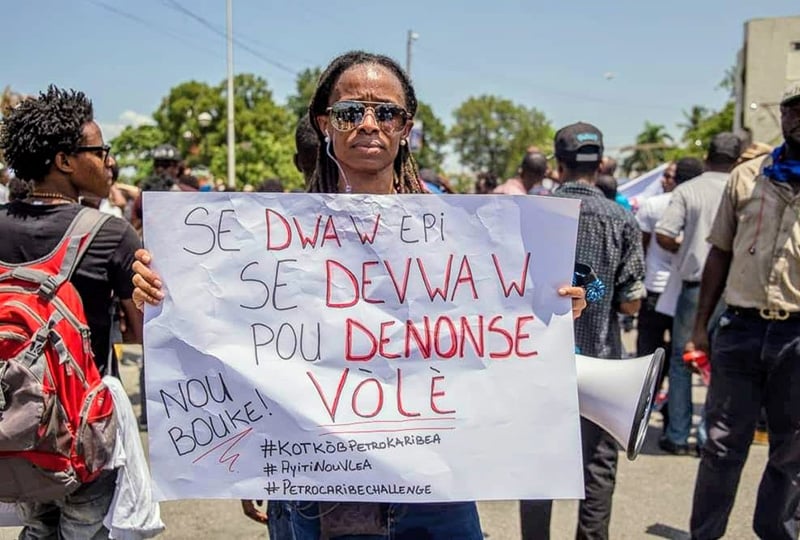
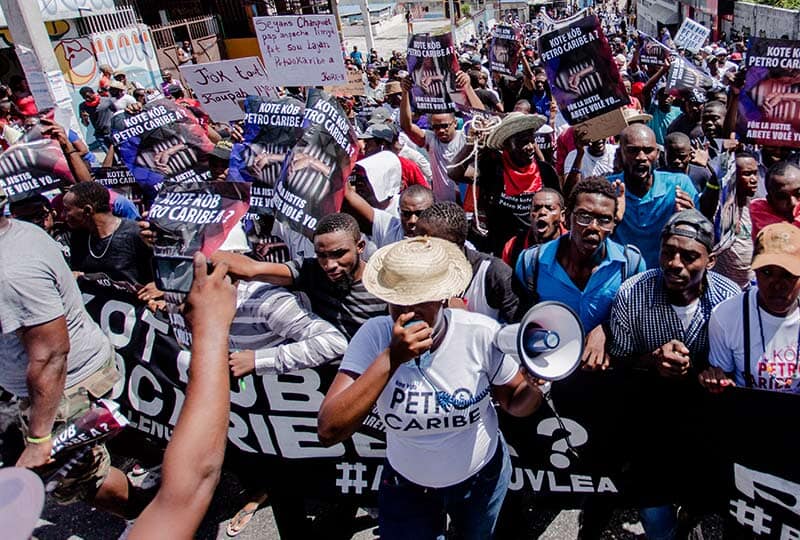
But in the week before the two attacks, I aired a series of radio reports raising deep concerns about contracts the transition government made with foreign companies to build prisons, restore security, and manage customs.
The prison contract was set to last 50 years and, according to Fondasyon Je Klere, a human rights group that investigated it, could cost Haiti more than $6 billion. Fondasyon Je Klere argued that the unelected transition government had no right to bind Haiti to such long-term contracts, effectively transferring core functions of the state to foreign private companies without the approval of elected representatives.
I cannot establish that the broadcast had anything to do with the attacks. But I cannot ignore the timing: I aired sensitive reporting, and hours later armed men came to my home.
In Haiti today, violence is often a more immediate means of retaliation than the courts, which struggle to prosecute even serious crimes. Still, we see the new decree as a threat. It doesn’t need to be widely enforced to change what journalists do. Reporters, editors, and news directors are aware that it’s there—I see its effect on my own decisions.
As a journalist in Haiti, you spend a lot of time assessing the boundaries of what is safe to report. You learn where the lines are when somebody crosses one. Will gangs retaliate for this? Will the police?
Every day, at Kiskeya, we decide where to send reporters and what news to cover. This new decree makes us hesitant to cover officials’ wrongdoing, and we have more conversations about risk. You begin censoring yourself before anyone has to censor you.
Radio Télé Kiskeya is part of our national heritage. We are known for fighting for democracy, freedom of expression, and human rights. We went to prison for this under the dictatorship. We know there are moments when we have to slow down, and moments when we may even have to stop. We have to protect our journalists’ lives, as well as the institution we created.
We are trying to keep independent journalism alive in a very complicated universe of power and violence. We do not need the state to add the threat of prison.
Fighting for our survival—and for Haitians’ rights to information and an accountable government—means demanding the revocation of the defamation decree.
 Marvel Dandin is the director of Radio Télé Kiskeya.