By now, we all know how social media has sewn division in societies around the world — creating echo chambers that elevate tensions and give platforms to those spouting hate speech. In areas of extreme political division, these echo chambers have led to violence: from the January 6 insurrection in Washington, D.C., to the genocide of Rohingya Muslims in Burma.
But peace activists around the world are resorting to another — much, much older — form of media to help people listen to each other: the radio. From Guatemala to Haiti, Senegal and Uganda, AJWS has supported community radio stations broadcasting messages of peace and understanding, creating spaces for open dialogue, for many years.
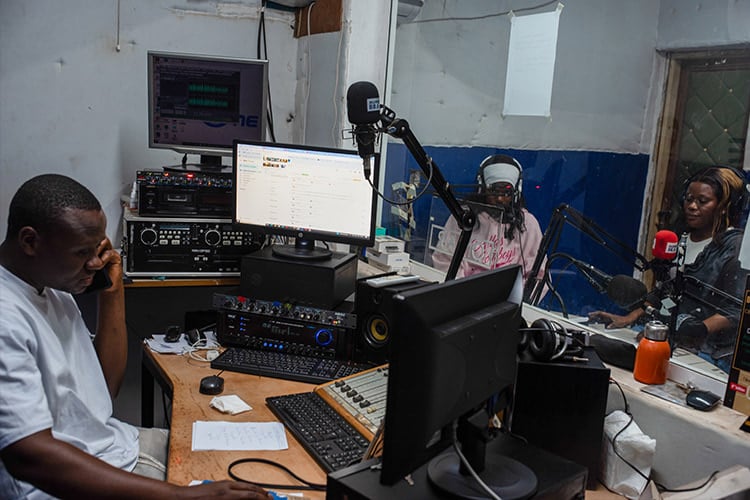
In Casamance, Senegal, an armed conflict between rebel factions and the military has upended civilian daily life for over 40 years, causing mass displacement and deep mistrust between ethnic communities — often from village to village.
Radio Number 1 FM is helping to heal wounds that are now generations-old. Journalist Ibrahima Gassama launched the station in 2024 after years reporting on the conflict and leading the peace process. He is a co-founder of AJWS partner organization COSPAC — a network uniting over 100 smaller, grassroots groups from across Casamance all devoted to peace.
Radio Number 1 FM has a similar goal — to give space to the many voices involved in and affected by the conflict. From station’s office in downtown Ziguinchor, they broadcast those voices to over 500,000 listeners spread across Casamance and neighboring nations Guinea-Bissau and The Gambia.
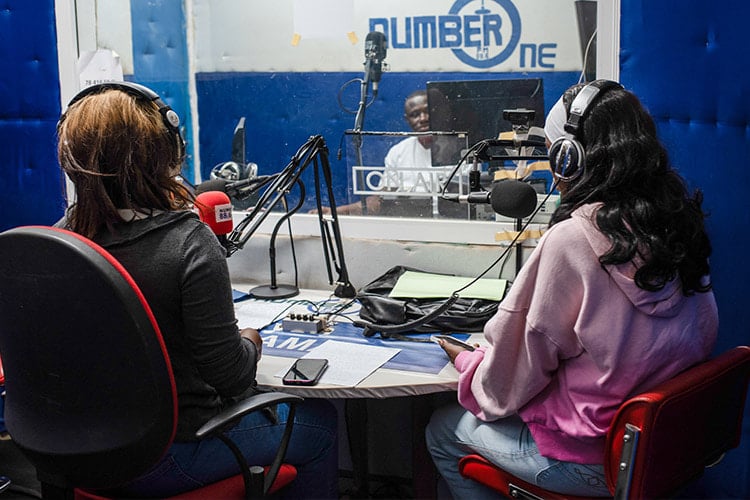
“As a journalist, I’ve always refused to fall into sensationalism — just relaying bloody violence,” says Ibrahima. “I built this station because I believe the radio is a powerful communication tool to encourage true dialogue. We rely on the strength of an argument, rather than making an argument through force.”
In the past few months alone, Ibrahima and his staff of young radio hosts have broadcast interviews with high-ranking military officials, peace activists (including multiple AJWS grantees), villagers who recently returned home after being displaced by violence, and members of a community affected by illegal logging operations. Rebels and former rebels offer their perspectives. Local priests and imams stop by to record messages of peace, unity and faith. The team broadcasts from the studio, and also records in remote areas across the region — “giving a voice to the voiceless,” says Ibrahima.
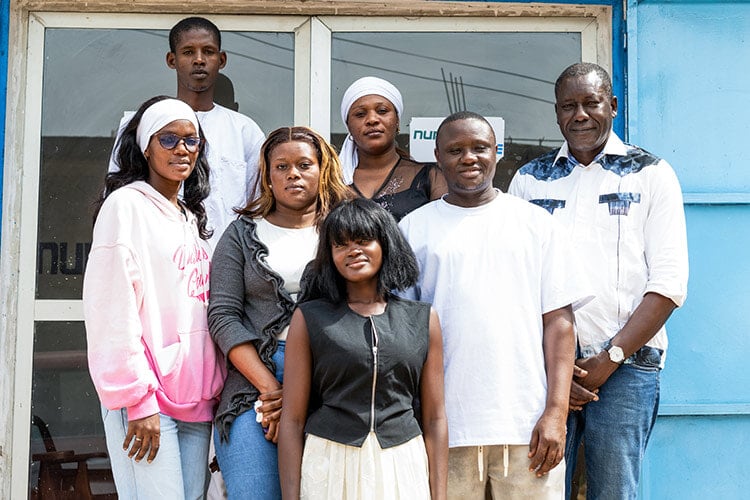
Accessibility is key at Radio Number 1 FM; Ibrahima knows divides between ethnic groups have only prolonged the armed conflict. That’s why the station broadcasts in 13 languages, including Senegal’s most commonly spoken French and Wolof, as well as ethnic languages of Casamance like Diola, Manjak and Balanta.
“Our programming reflects the reality of life in Casamance; this is a home to many different communities. And promoting that cultural and religious diversity is our strength,” he says.
Radio Number 1 FM launched as the conflict has entered a new phase; thanks to COSPAC’s peacebuilding work, in 2023, a major faction of rebels put down their weapons and agreed to enter peaceful negotiations with the government. Casamance is more stable than its been in decades. But with thousands of rebels still clinging to violent resistance, and recent coups in nearby Guinea-Bissau and Mali, peace activists in Casamance will only rest when a true, comprehensive peace agreement is reached. And Radio Number 1 FM will, undoubtedly, keep broadcasting long after that.
“Disinformation and hate speech are increasingly spread through social media. But the radio combats that division, building social cohesion and understanding,” says Ibrahima. “Our slogan is ‘the radio that speaks to you — and listens.’ We’re working everyday to live up to that message.”