In late September, the confluence of the United Nations General Assembly and Climate Week 2026 put development, diplomacy, and geopolitics on the front lines of international discourse and on the busy streets of Manhattan. While presidents, prime ministers, and parliamentarians sought—or actively refused—to advance international cooperation, AJWS was on hand to ensure that global human rights remained part of the conversation.
AJWS demonstrated field expertise by sharing perspectives, convening experts, and promoting the work of its grantees at more than 15 different sessions. And in a world grappling with a global energy crisis, alarmingly high food insecurity, plummeting biodiversity, global conflict, and artificial intelligence influencing our map of the future, the stakes were never higher.
“Climate Week and the General Assembly draw on many of the same voices asking familiar questions,” said Payal Patel, Director of AJWS’s Land, Water, and Climate Justice program. “Even while we see an enormous retreat from democracy and multilateralism around the world, how can we renew support for, and solidarity with, grassroots movements to address these mounting global crises? How can we take action to ensure the planet can continue to support human life—and, really, all forms of life—while also tackling the greatest inequality of resources and wealth we have ever seen?”
Everyone Can Learn from Our Partners
At the root of these questions, says Patel, is a simple, but oft-ignored idea that drives AJWS’s work: “Grassroots movements can teach our political leaders a lot about finding real and lasting solutions to interconnected crises.”
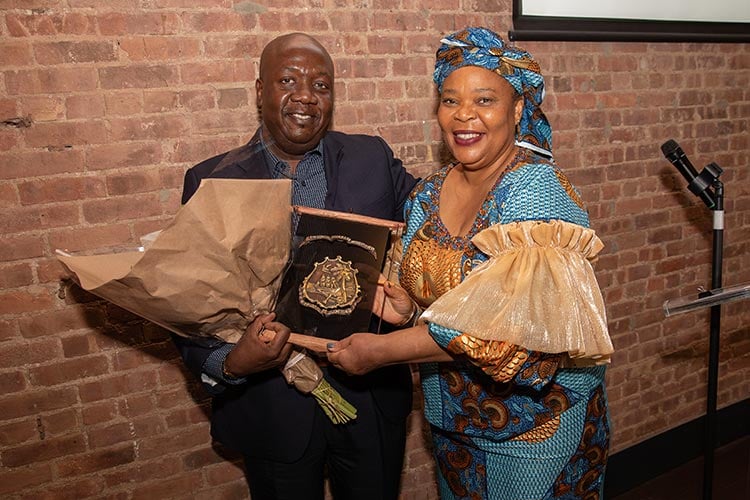
AJWS’s week opened downtown on Monday, Sept. 21, with Liberian peace activist Leymah Gbowee honoring AJWS on behalf of the Gbowee Peace Foundation for Africa – USA. Tawanda Mutasah, AJWS President and CEO, accepted the award, pointing out the values AJWS shares with the foundation as it invests in women and girls in Liberia and beyond. Gbowee, a former AJWS grantee, was the recipient of the 2011 Nobel Peace Prize for helping to lead a women’s peace movement that helped to catalyze the end of Liberia’s 14-year civil war. AJWS played an integral role in supporting this movement.
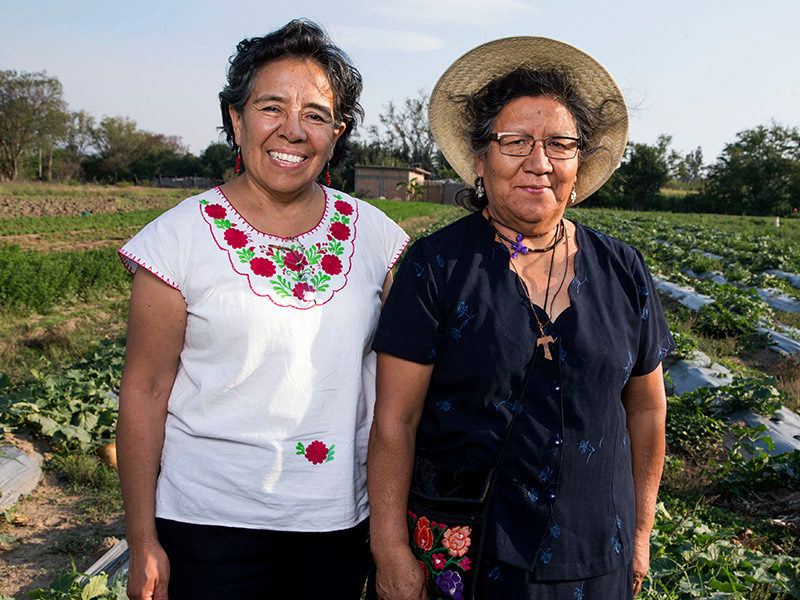
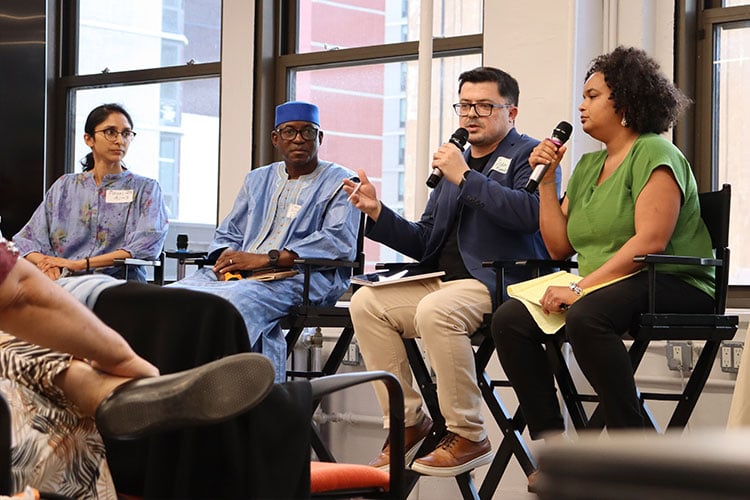
On Wednesday, Sept. 23, Patel, a recognized leader in climate justice, ecofeminist philanthropy, and Indigenous communities’ land rights, convened “Agroecology and Local Food Markets: A Climate Solution,” a panel featured Global South speakers as well as the head of New York City’s new Office of Urban Agriculture.
Faith-Based Thinking with Foreign Policy
Mutasah was back in the limelight on Thursday, Sept. 24 at Foreign Policy’s Global Development Forum. During an afternoon session that included speakers from United Nations Development Programme, the International Organization for Migration, and the World Food Program, Mutasah joined FP publisher Andrew Sollinger to probed how faith-based funders like AJWS have opportunities to build affinity with supporters in a way other philanthropies cannot.
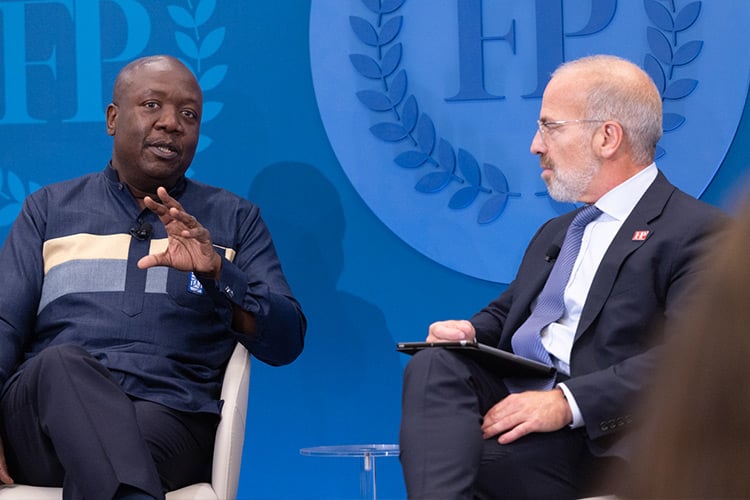
“In many ways, the norms and standards that we have relied on to protect human rights globally are being obliterated and diminished in their authority,” Mutasah told a standing-room Rockefeller Center audience. “Values matter. The values of the Geneva convention and the values of Judaism, like b’tzelem Elohim, the idea that every person is created in the divine image… these values matter.”
Later the same day, the Global Justice Clinic at NYU Law, the Berstein Institute for Human Rights Law at NYU Law and the NGO Taproot Earth held a gathering called “Understanding Climate Reparations & Climate Migration” featuring Nixon Boumba, AJWS’s human rights expert in Haiti. Boumba shared a vision for what Haiti requires to repair the ravages of unequal distribution of land assets amidst ongoing crisis in democracy and the island nation’s severe vulnerability to the climate crisis.
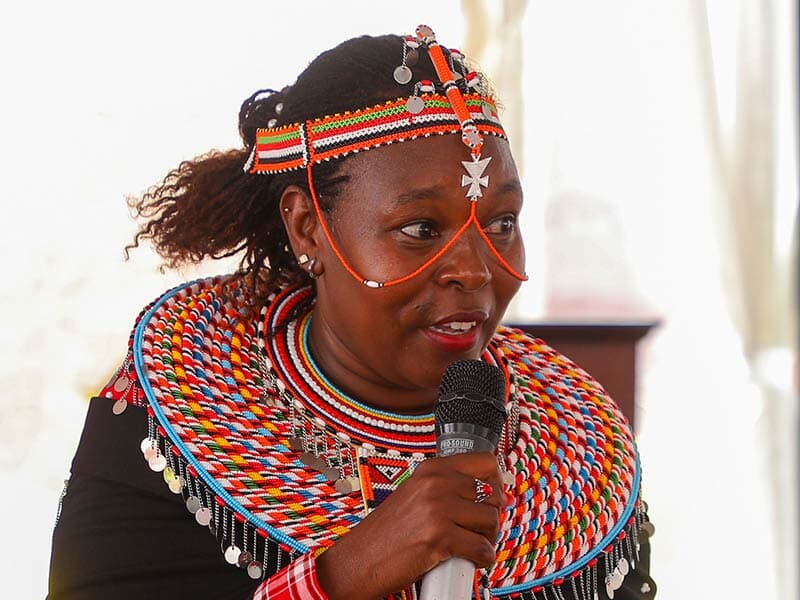
Atop these marquee events, AJWS staff participated in several invitation-only events, seminars, and meetings that mapped the challenges facing grassroots movements. In addition, several AJWS long-time partners traveled to New York for the week. AJWS welcomed Jane Meriwas, from Kenya’s Samburu Women’s Trust; Nuria Gollo of the Indigenous Women’s Council, also from Kenya; and Pierre Esperance of the National Network for the Defense of Human Rights in Haiti.
“AJWS is tireless in our efforts to remind world leaders that the path to solving persistent global problems is to listen to the folks on the ground,” said Shari Turitz, AJWS’s Vice President for Programs. “Time and time again, they have repeatedly demonstrated the value of grassroots solutions, a track-record matched by few elected leaders.”