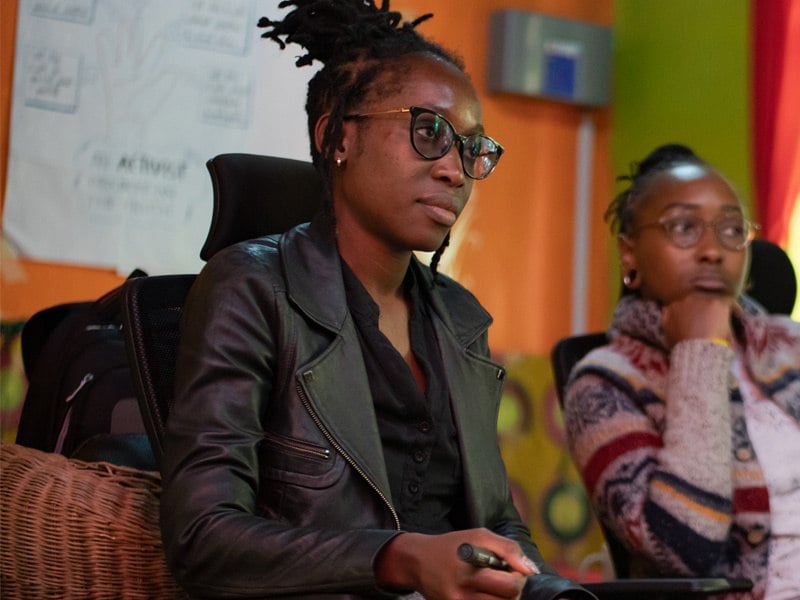

The women of AJWS grantee La Asociación Mujeres Q’eqchi Nuevo Horizonte (ANH), or Q’eqchi Women New Horizon Association, know that creating a Guatemala free of violence against women is long, paradigm-shifting work that they say will take generations. But ANH also supports survivors of violence in moments of crisis, meaning that the team’s patience and steady determination is balanced by lightning-speed action.
Twenty-two-year-old Flora Arabelia Caal has experienced both sides of ANH — support that she says changed her life.
Flora was just a teenager when she fell in love with her neighbor. The young couple quickly had a child, Elder. Per Guatemalan custom, Flora moved in with her partner’s family. She expected to live a traditional life in rural Guatemala: raising children, cleaning, and cooking. She’d never known an alternative.
“I thought everything he told me was true,” she says today. “And he spoke so beautifully.”
But her husband would drink often, and, to Flora’s horror, began abusing Elder when he was still an infant. Flora’s mother-in-law refused to believe her — and tensions reached a boiling point. Flora’s mother-in-law kicked her out of the family home, dumped her belongings outside, and locked the door, separating her from Elder.
Flora felt completely lost and helpless — her life was spiraling. In that moment of crisis, a woman who’d witnessed the incident stepped in and suggested they go, together, to the ANH office in Chisec, the nearest town.
Flora still remembers the first moments the ANH team welcomed her into their flower-adorned office.
“They sat me down and said to me: We will help you get your baby back, and we will hold this pain in your heart until you can hold it yourself,” says Flora.
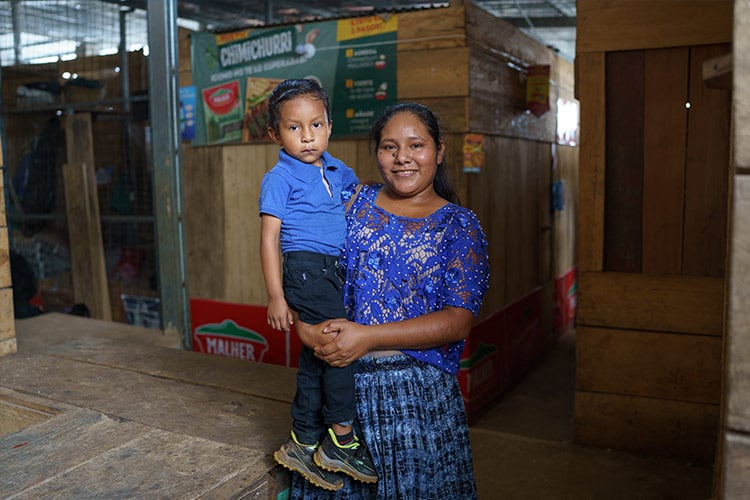
A critical piece of ANH’s work is accompanying survivors of violence to local police stations to file a report — a process that can be daunting and humiliating in a society where women are frequently not believed or disregarded when they seek help from law enforcement. ANH staff demanded that police treat Flora with dignity, and officers escorted her back home where they rescued Elder and issued a restraining order against Flora’s husband.
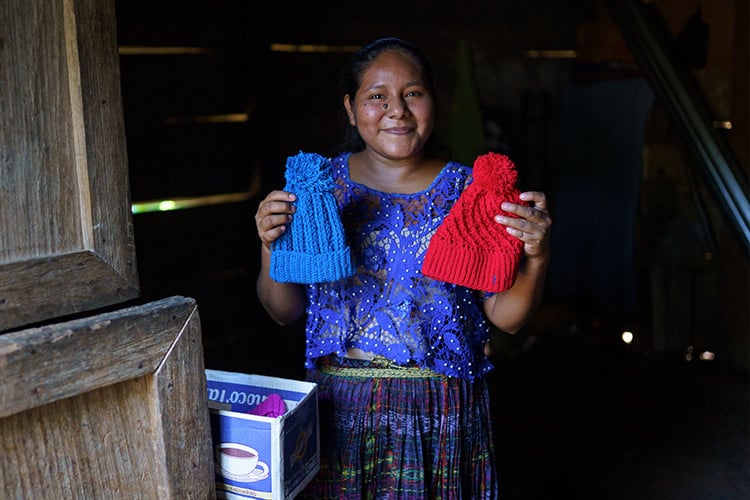
Flora and Elder moved in with her mother, and began life anew. But she kept attending ANH events — women’s empowerment workshops where she had opportunities to connect with other women and share her struggles and dreams. She later joined a group ANH facilitated to help women learn to crochet guipiles — or traditional, Indigenous women’s blouses. Today, Flora is earning a living selling guipiles, as well as knitted baby clothes, in the local market — supporting her family without relying on her ex-husband. She also grows crops on her mother’s small plot of land to feed her family. Elder is now a toddler, and Flora vows to raise him with a different understanding of what it means to be a man.
Members of the ANH team say this balance between crisis response and long-term social change is critical to their mission to eradicate gender-based violence from Guatemala — and shift the cultural limitations on what a woman can and cannot do with her life.
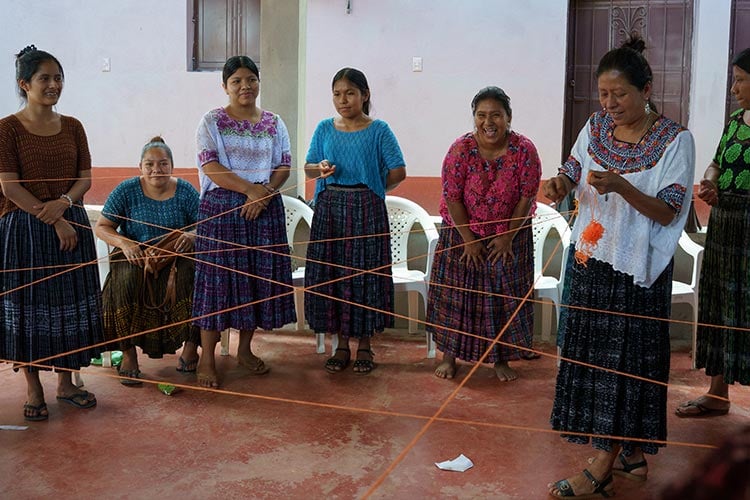
“It’s not inherent for women to be subservient to men, or for men to act with violence. These are things we’ve been taught in society, in the streets, in church. So if we learned these ideas, then it’s possible we can unlearn them,” says ANH Founder and Coordinator Maria Gualim. “This gives us hope for change. We’ve been shown a certain path, and we’re carving out a new one.”
For Flora, walking a new path has changed her entire outlook on life — and how she sees herself.
“I’d lost my smile completely. But when I look in the mirror now, I see a different woman,” says Flora. “Now I look around: I see the chickens I’m raising, the crops I’m growing, the guipiles I’m creating. It’s all me. And in my son’s face, I see my own happiness.”