In the Adjumani district of Northern Uganda stands the Zoka Forest Reserve, one of the country’s magnificent rainforests. Its canopy provides shade to an extraordinarily biodiverse population. Rare butterflies, flying squirrels, primates, old-growth mahogany trees and hundreds of plant species make Zoka a place worth protecting at all costs. And to the native communities who coexist with the forest, it is a natural, cultural and spiritual home — beloved for hundreds of years.
It is also in grave danger.
A dangerous cartel with links to Uganda’s military — the Uganda People’s Defense Force (UPDF) — is turning Zoka into a wasteland with illegal deforestation and charcoal production operations. But AJWS grantee partner Friends of Zoka (FOZ) is doing all it can to protect this special land. Fronted by team leader William Amanzuru, FOZ is a grassroots organization dedicated not only to protecting the Zoka Forest Reserve through activism and the documentation of illegal activity, but to changing the national mindset around topics like conservation, civic responsibility and human rights.
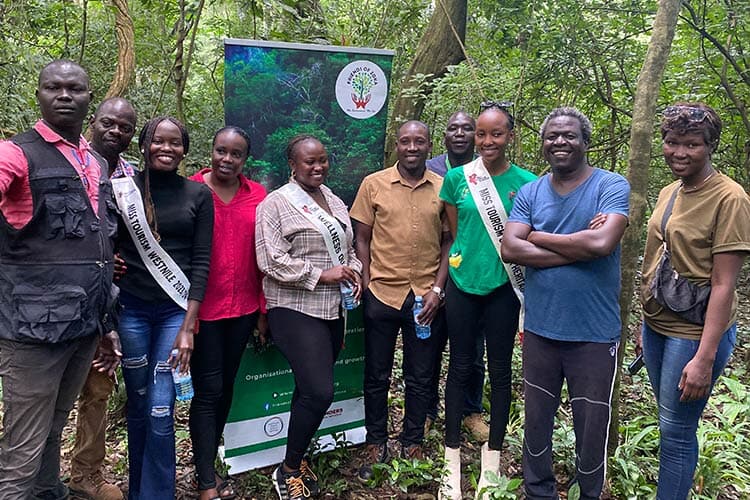
This alone would be a herculean task — but it’s made all the more difficult by the fear and violence that plagues the FOZ team, as well as the communities who rely on the forest for their livelihood. Supported by local and national politicians, as well as private investors both regional and abroad, the perpetrators can often seem like a force of unstoppable destructive power. The forest teems with armed soldiers, who frequently terrorize local communities. Those who live near the forest “can never have a life,” says Amanzuru. “They are always under threat. They ask themselves, ‘Will the person with the gun shoot or protect me?'”
In addition to using military force to protect the charcoal operations — which were declared illegal by President Yoweri Museveni in 2023 but continue without repercussions — there have been many instances of domestic and sexual violence nearby. Members of the cartel have terrorized the communities, and yet, Amanzuru says, “You cannot accuse them because they are tied into military and police operations. The region suffers. People have been lost, their deaths unaccounted for. There are no investigations, no one to hold accountable.”
Charcoal is the primary cooking fuel and source of livelihood for a vast majority of Ugandan households. Burning charcoal causes air pollution and contributes to global warming — its production destroys approximately 122,000 hectares of forest annually.
At its heart, though, is greed. Charcoal can be purchased in Uganda very cheaply, then significantly upsold in neighboring countries. And because of how lucrative it is, those with vested interests in logging and charcoal production will do anything to protect their operations.
To FOZ, this can sometimes feel like an unwinnable battle. William reflects that, “We don’t lead a life of hope. We lead a life of looking and reflecting. When you take a few steps ahead you must take many steps backward to assess your security.” He speaks about how he and his colleagues have had their houses broken into, how they are constantly surveilled, how the perpetrators penetrate their families and friends, occasionally recruiting them for surveillance. This, he says, is “a life of survival.”
John Unzima, FOZ’s communications and documentation officer, agrees. “We have been abused and harassed. They are only used to fighting — and not talking through our differences.”
And yet, there is hope. For Zoka. For national attitudes. For Uganda.
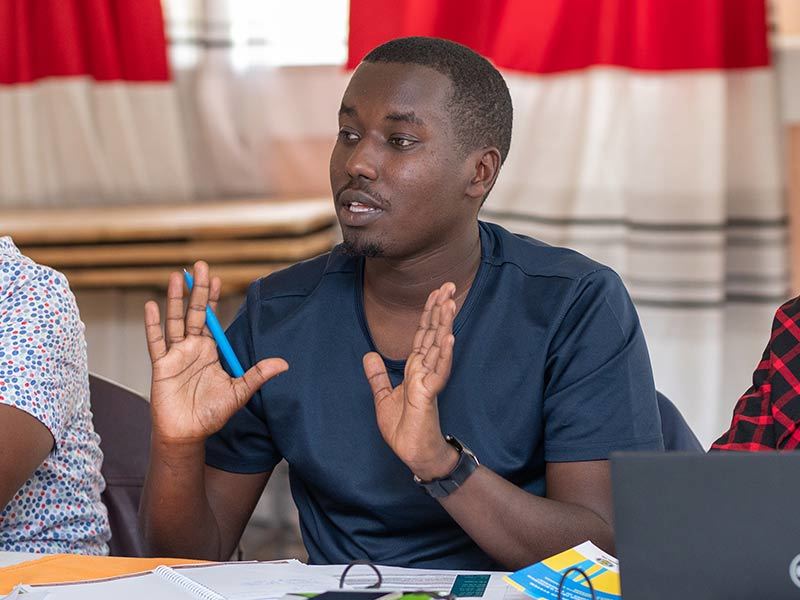
A new initiative is giving William, John and their FOZ colleagues a reason for optimism. With support from FOZ, an association of Ugandan university students and graduates called the Ma’di Debate Society is bringing serious human rights issues to the forefront of youth culture in Uganda. FOZ gives them a platform and transportation to schools to hold their debates, which William describes as a “mind-changing activity.” He says that people “walk out emotionally challenged.”
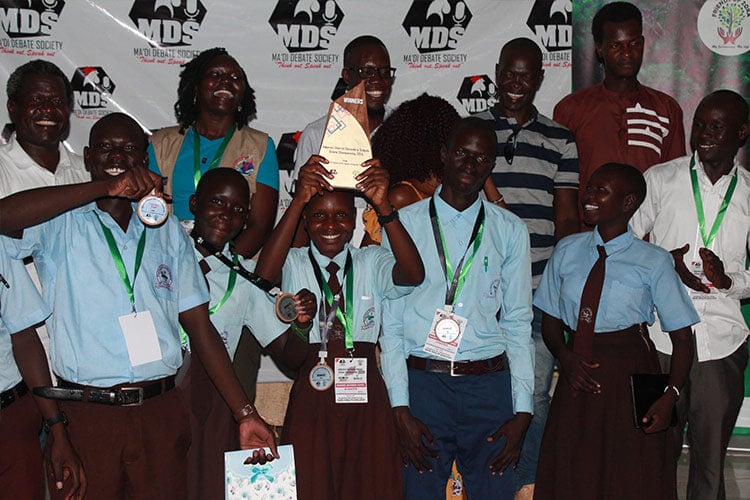
The debates often extend beyond conservation and into more philosophical questions regarding what citizens owe their countries — and the world. With their increasing popularity, politicians have begun to follow the outcomes. FOZ summarizes the debates and shares them with local media to keep “changing the mindset” around conservation, the environment and human rights in Uganda.
This is precisely William’s point when he says he believes that “resilience through dialogue is a good and principled way” to make real change. John agrees. “Debates build a culture of conversation — and a community that can talk critically.” Indeed, the survival of the Zoka National Reserve — and the future of the country — rests in the hands of the young.
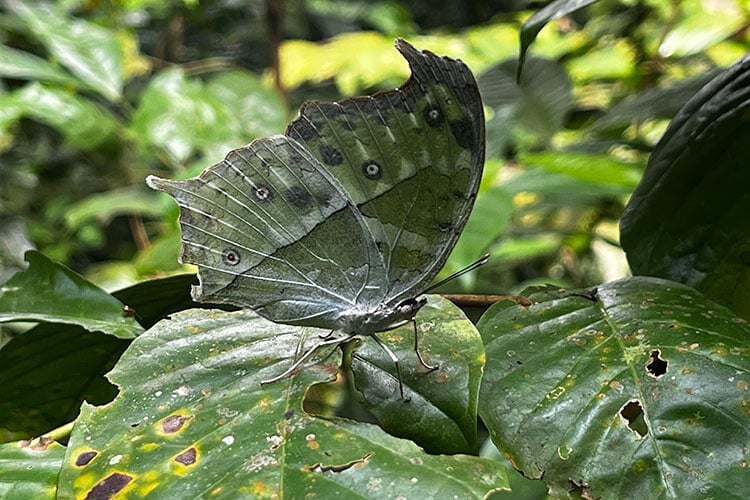
Talking about a recent experience he had walking through the rainforest, William describes encountering a butterfly he had never seen before, one that changed colors like a chameleon. Despite the fear that he and his colleagues feel each day, the hopelessness that weighs on their shoulders, and the sadness felt with every felled tree — there was nothing but reverence in his voice.