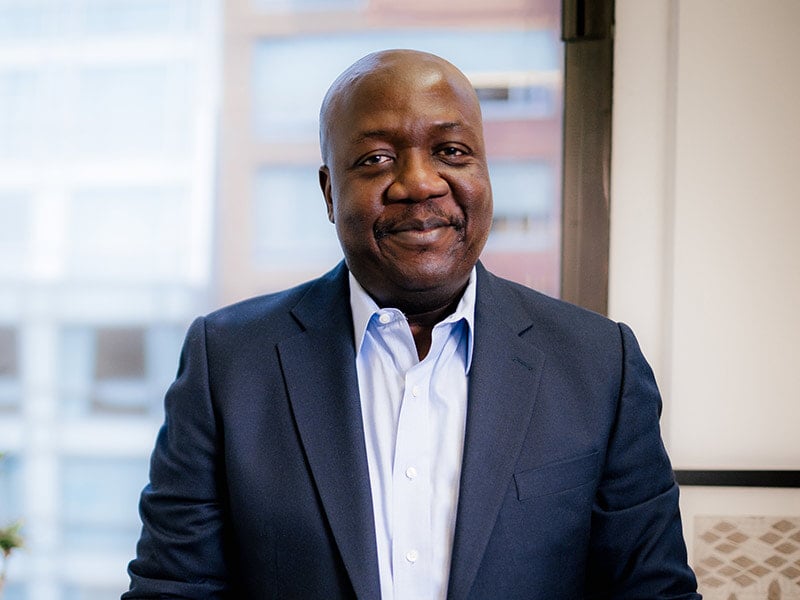
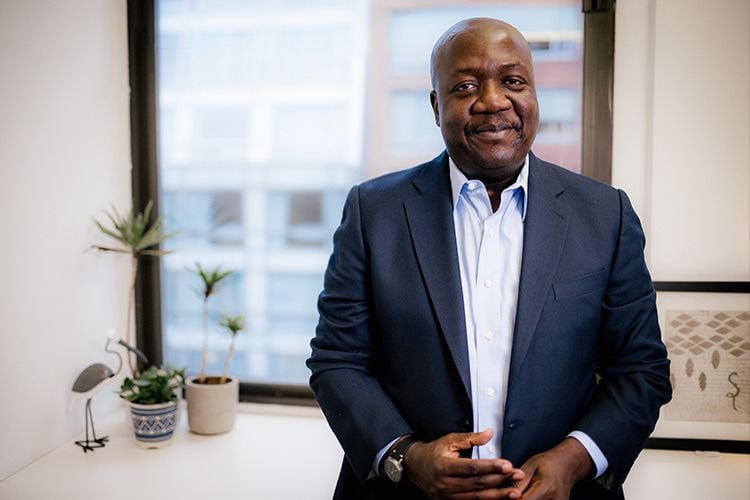
In February, we welcomed Tawanda Mutasah as AJWS’s new President and CEO. A veteran human rights leader, he has spent the past three decades advancing rights-based social change around the world.
Tawanda joins AJWS at a challenging time for global human rights, with authoritarianism on the rise and freedoms being curtailed. And so, we sat down with him to learn more about his life, his work, and his vision for the future.
Q: What intrigued you most about working at AJWS?
Tawanda: I have spent many years in the human rights, development, and humanitarian sectors. And so, I have been looking at AJWS from the outside for some time. I could see talented people; I could see great values; I could see a great way of working in terms of the model that AJWS uses; and I could see partners that were well-connected to the mission of AJWS. There are, of course, many kinds of human rights organizations in the world. But this combination of having the work and the voice of partners on the ground, together with an organization that has a global mandate in the issues and geographies we work in, all partnering with communities in the United States that offer solidarity, resources, and support — that is an amazing combination for impact.
Q: Could you reflect on the values of AJWS?
Tawanda: In so many ways, the values speak for themselves; not only in our name, but in the way in which we have seen people contributing ideas, resources, values, solidarity, and friendship to communities in Africa, in Latin America, in the Caribbean, in Asia. Rabbi Heschel spoke about ‘praying with my feet’ in the context of the Civil Rights Movement. The idea we can ‘pray with our feet’ as an organization founded in Jewish values and commitments is part of the strength of AJWS.
Q: Given all the challenges facing global human rights right now, what keeps you up at night?
Tawanda: What keeps me up at night is infinitesimally smaller than the jeopardies our partners face and the sacrifices that they make in their work. But what I do think about most in this role is whether we are doing enough to support frontline human rights defenders that depend on the friendship, the commitment, the solidarity, the accompaniment, and the contributions of AJWS.
Q: You have had a long career in social justice. Are there any human rights heroes you carry with you as inspiration in doing this work?
Tawanda: I tend to favor my mother. In the context in which I grew up, she was my first inspiration about understanding that hope is actually the currency that one uses to come out of difficult situations and circumstances. It’s not bitterness, it’s not resentment. It’s not anything else. It is hope. And hope itself can be a radical proposition.
Q: What message of hope do you have for the AJWS community?
Tawanda: The mission of AJWS could not be more important. Our work is unique at many levels. We sit at the confluence of many dimensions that are so important for human rights right now. To have the opportunity and the responsibility to lead talented colleagues that are dedicated to this work is a privilege. I find that immensely humbling and important. And as we do more thinking about what the future beckons us to do, I think we are going to realize, in sharp relief, that our work is unique at many levels. So let us go forth, our mission beckons.
Read on to learn more about Tawanda’s life, career, and reflections on AJWS’s mission.