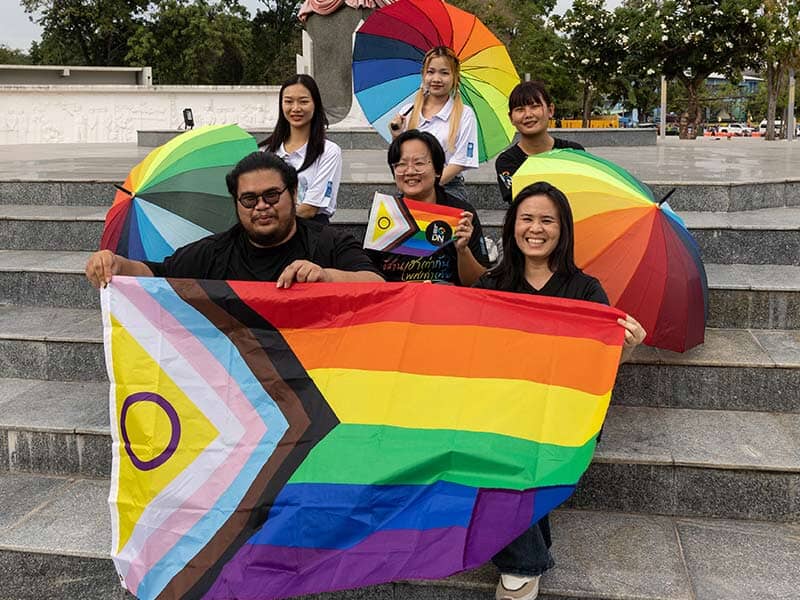
In June 2024, Thailand’s LGBTQI+ people achieved a massive human rights victory when the country legalized same sex marriage. But activists know there is still work to do.
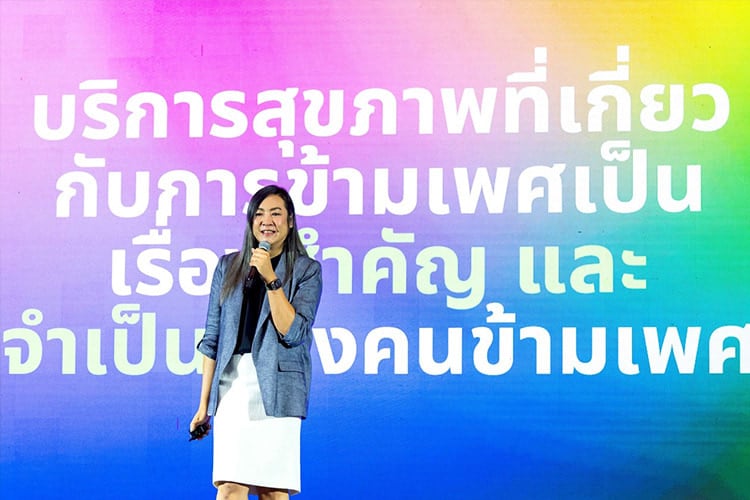
“Marriage equality opened more space for us to talk about trans rights,” AJWS partner Hua Boonyapisomparn (she/her) of the Foundation of Transgender Alliance for Human Rights (ThaiTGA), says. “Even though marriage equality is very important, for trans and nonbinary people there is other important legislation, which is legal gender recognition and access to gender-affirming care. Our needs are different.”
Trans people in Thailand currently cannot legally change their gender markers on official documents, denying them the ability to live authentically under the law. Also, public welfare programs are often divided along the gender binary making these benefits challenging for trans and gender-diverse people to access.
Hua was instrumental in passing the marriage equality law together with other LGBTIQ+ advocates and allies; now she has her eyes set on expanding protections for transgender people. And she’s got a plan to get there. Hua and two of her colleagues from ThaiTGA, Note and Katy, are part of the Transgender Task Force, a group made up of trans activists from all four regions in Thailand. After boldly advocating for trans rights in Thailand for years, their work is paying off: the government decided to take action to improve trans people’s lives across the country. But they knew they needed guidance, so the Thai government’s National Health Committee Office approached the Task Force to establish a working committee in March 2025 to advance public policy around transgender wellbeing.
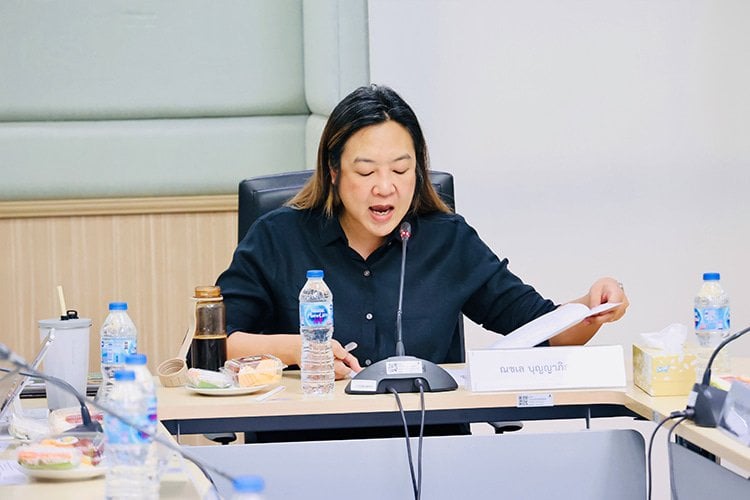
It is a breakthrough that Hua has been working towards for decades. She has been helping improve trans people’s lives for over 20 years by increasing access to HIV prevention and gender-affirming care, advocating for trans rights and modeling and embodying trans joy. Hua now chairs the working committee, made up of thirty-five trans activists, health and human rights activists, government workers, and experts. Together they drafted the Transgender Wellness Charter, a monumental comprehensive plan that will help improve trans people’s wellbeing throughout the country.
The group has identified five main areas of focus:
- legal gender recognition
- public and social welfare
- gender and sexuality education
- gender-affirming healthcare
- inclusive economies and equal employment
“We focused on these areas within the charter because we believe that if we can improve these five areas, we can improve the quality of life and wellbeing of transgender people here in Thailand,” Hua explains.
The charter outlines the goals of the trans rights movement, creating a roadmap of laws and legal protections needed to achieve equality for trans people. For instance, it aims to update the public education curriculum to ensure that students across Thailand are learning about gender and sexuality as the norm. It also seeks to make gender-affirming care considered medically necessary rather than simply cosmetic as it is now. Gender-affirming care must be available nationwide for all trans people, not only in major cities. The hope is these protections will also end rampant employment discrimination against trans people.
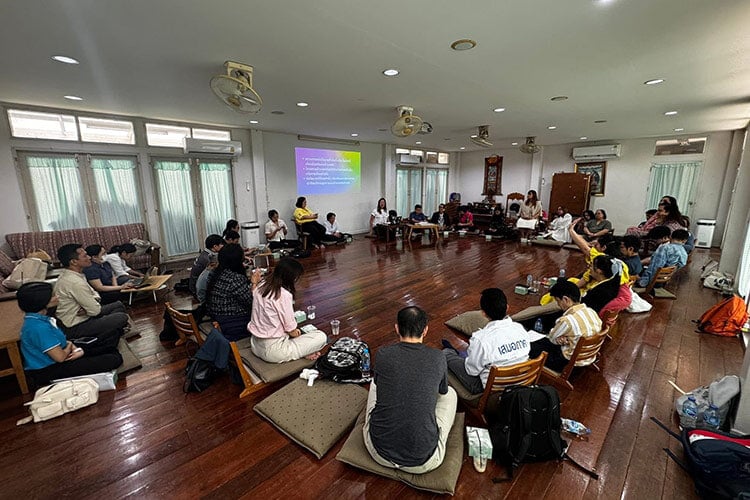
The trans activists who drafted the charter want to make sure voices from across their community are heard, so that the plan truly represents the challenges people face and their dreams for the future. To that end, the drafting committee is holding public hearings, inviting people from across Thailand to add feedback, before the charter is finalized on March 31, 2026 — Transgender Day of Visibility.
With this charter, there is now a way for the government and healthcare sectors to be in dialogue with the trans community directly and help meet their needs. After the charter is launched, the working committee will continue to gather a few times a year to discuss progress on the five main areas of focus and make any necessary additions or revisions.
In the meantime, Hua and ThaiTGA will keep building power in Thailand for trans rights through advocacy, education and organizing.
“I believe that in order for us as a transgender community to improve our quality of life, it’s not only our responsibility,” Hua says, “it’s the responsibility of our whole society.”