

You’ve certainly heard that the upcoming midterm elections may be extremely consequential to our lives here in the United States. But when we head to the voting booth on November 3, our choices will also have a major influence on people’s lives around the world, too—particularly if majority control of both chambers flips.
The last two years have seen dramatic upheaval in both U.S. foreign assistance and the infrastructure that supports it. The administration’s hasty dismantling of the United States Agency for International Development (USAID), once the world’s largest foreign aid agency, sent shockwaves around the world, including in countries most affected by infectious disease, climate change, and retreats from democratic norms. AJWS grantees lost huge portions of their budgets while nearly half reported increased security concerns; they communities our partners serve have suffered greatly.
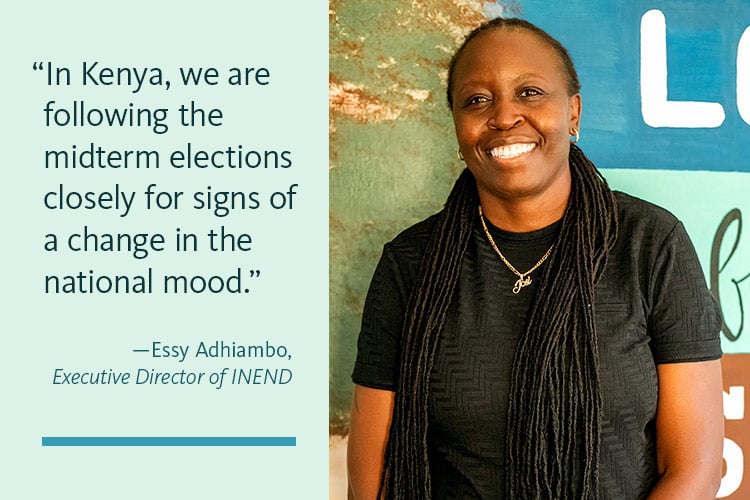
“’America First’ has harmed people all over the world, especially the most vulnerable,” said Essy Adhiambo, Executive Director of INEND, a grassroots human rights organization on the Kenya coast funded by AJWS. “Instead of holding other nations to account, this Congress has allowed this administration to isolate marginalized groups, walk away from multilateral treaties, and turn lifesaving aid into a transactional enterprise. In Kenya, we are following the midterm elections closely for signs of a change in the national mood.”
What if Congress Changes Hands?
Should voters return the House of Representatives to Democratic control, the White House will need to negotiate spending with an elected majority that has historically shown greater alignment with our role as a defender of human rights. While a Republican-led House would likely continue to grant the administration’s agenda a wide berth, a House controlled by Democrats may be more inclined to restrict administration policies hurtful to AJWS grantees such as the expanded Global Gag rules, which block resources to any organization, multilateral institution, or government that uses U.S. funding to provide any services that do not adhere to their agenda.
Another body with the power to influence—or obstruct—global human rights is the Senate Foreign Relations Committee (SFRC), which must approve nominees for executive-level positions in the State Department. In February, when President Trump nominated an outspoken white supremacist for a senior role in international affairs, confirmation rested on a single senator’s vote. If there is a change in SFRC chair, nominees like Carl would never stand a chance of being confirmed.
The small steps forward for human rights movements that might come from a turnaround in either the Senate or the House of Representatives would become leaps forward if both houses of Congress change hands. With the House and Senate acting as a backstop, the White House would be forced to negotiate almost everything on its agenda. In his final two years in office, anything the President sought to accomplish would face oversight and demands for accountability, the kind of scrutiny that has been absent from Washington since January 2025.
The implications of bicameral executive oversight could coalesce into a sign among allies that the U.S. has regained its role as a defender of norms established in 1948 by the Universal Declaration on Human Rights. Legislation and other policies seeking to strip people of rights, whether in the U.S. or abroad, would not pass, and authoritarian rulers would once again risk U.S. sanctions for violating these human rights standards.
“Respect for the Rule of Law”
“Foreign governments take notice of our actions far beyond the policies we enact or the budgets we approve,” said Rori Kramer, AJWS’s Director of U.S. Advocacy. “A midterm election that returns one branch of government toward disdain for authoritarianism and respect for the rule of law won’t go unnoticed in palaces and parliaments of democracies and authoritarian nations like. Here in Washington, where AJWS advocates on our grantees’ behalf, we could begin to make plans for recovering some of the ground that’s been lost.”
To be sure, the results of the 2026 midterm elections could further exacerbate the upheaval of the past two years. Or they could augur the end of forgiveness for nations guilty of massive human rights violations—and prepare grassroots organizations for a larger change in leadership as the 2028 presidential election season gets underway.