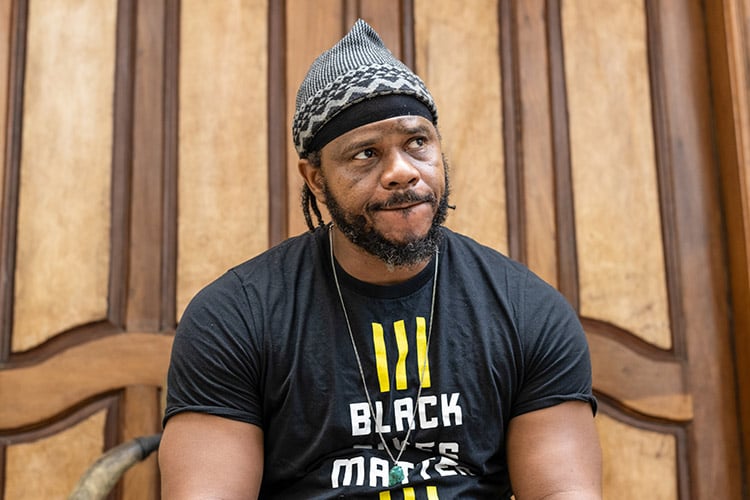
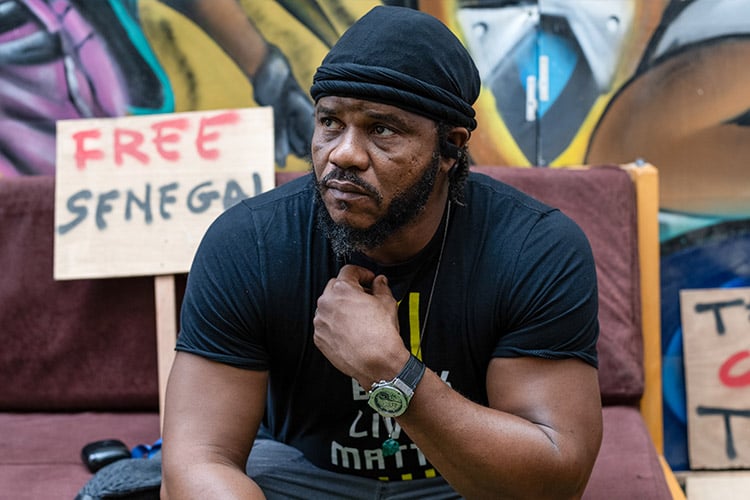
For Thiat Keurgui (born Oumar Cyrille Touré), freedom of speech isn’t just an aspiration.
As one of Senegal’s most popular rappers, and a co-founder of the social justice movement Y’en a Marre, the freedom to speak — or rap — is what his life is built upon.
The harsh reality of curtailed freedoms in Senegal hit Thiat early and hard. At 17, Thiat and his childhood friend Kilifeu, released a hip-hop track criticizing the mayor of Kaolack, their town in central Senegal.
“He was totally failing the people; Kaolack had a broken ambulance, and the injured person had to pay for the gas. It was a dead city,” Thiat says now.
The song spread like wildfire among young people in Kaolack — and landed Thiat and Kilifeu in prison. Upon release, they were kidnapped and beaten. The experience left Thiat stunned, but convinced that he was on the right path. By the early 2000’s, the two rappers had shifted the focus of hip-hop in Senegal away from cars and money, as they released hit after hit about social injustice, corruption, and democracy. They’d toured Europe and Africa and won national and international music awards.
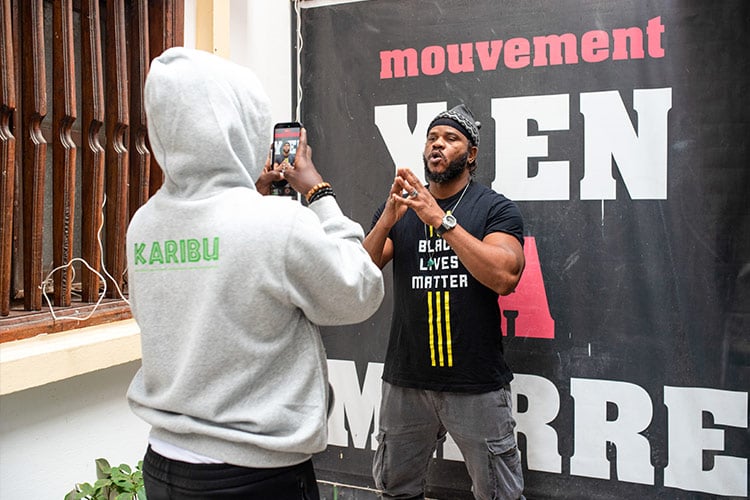
In 2011, everything changed. Thiat the rapper truly became Thiat the activist. That year, as Senegalese President Abdoulaye Wade ran for an unconstitutional third term, Thiat, Kilifeu, and other rappers banded allied themselves with progressive journalists to form Y’en a Marre — a social movement that quickly engaged thousands of young people in widespread peaceful demonstrations, pushing them to vote. Thiat was imprisoned again, but Y’en a Marre couldn’t be stopped. Wade lost the election resoundingly.
“Hip-hop had earned us a lot of respect and street cred, but the wider audience weren’t just hip-hop fans — it was all young Senegalese citizens,” says Thiat. “Many of them saw us as troublemakers. When we launched Y’en a Marre, alongside journalists and activists, people did a double take. We were talking about the issues all Senegalese people cared about. We became the people’s parliament.”
Y’en a Marre quickly expanded beyond political dissent. The movement launched educational and leadership training programs, kicked off a national hip-hop competition for politically-conscious artists, and dug deep to encourage all Senegalese citizens to work together to improve the country.
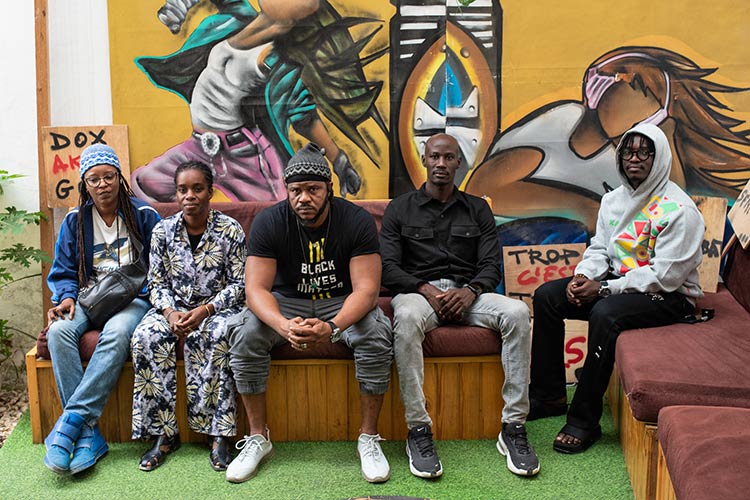
“We’ve planted thousands of trees all over Dakar, for example,” says Thiat. “And when we plant a tree, we knock on the houses nearby and ask the people: Can you water this tree we’ve added to your street? We need your help to make our city greener together. We’re building citizen engagement, one household at a time.”
In 2024, facing another president threatening to run for a third term, Y’en a Marre once again mobilized thousands of young voters to hit the ballot box — and democracy held. Thiat believes the seeds of a better Senegal that he planted at 17 are sprouting, but the work is never done.
“Democracy isn’t the destination you reach at the end of a long train ride. Democracy is the train itself. Some people get on, some get off, and you can’t see the end of the tunnel,” he says. “The work we do ensures the train keeps moving forward.”