After her parents died when she was a young girl, Nasha* went to live with her aunt. She later had to quit school because her aunt couldn’t afford the school fees. And so, it seemed like a blessing when, four years ago, a male relative offered to take her in and help pay for her education.
“I was happy for someone to help me finish school,” recalled Nasha, now 22. But her happiness was short-lived. Instead of caring for her, the relative sexually and physically abused her and locked her in the house without food for 8 months.
Nasha is not alone. In Uganda, there is a high rate of domestic violence against women – about 95 percent – but only one percent of offenders face conviction. Due to the country’s patriarchal culture, women are expected to keep silent and submit to men. Courts and police often do not want to get involved in these matters, considering them to be issues of the home or family. But AJWS partner Women’s Probono Initiative (WPI) is fighting to change Ugandan society and law so that women and girls like Nasha can live freely and safely — and their perpetrators are held accountable.


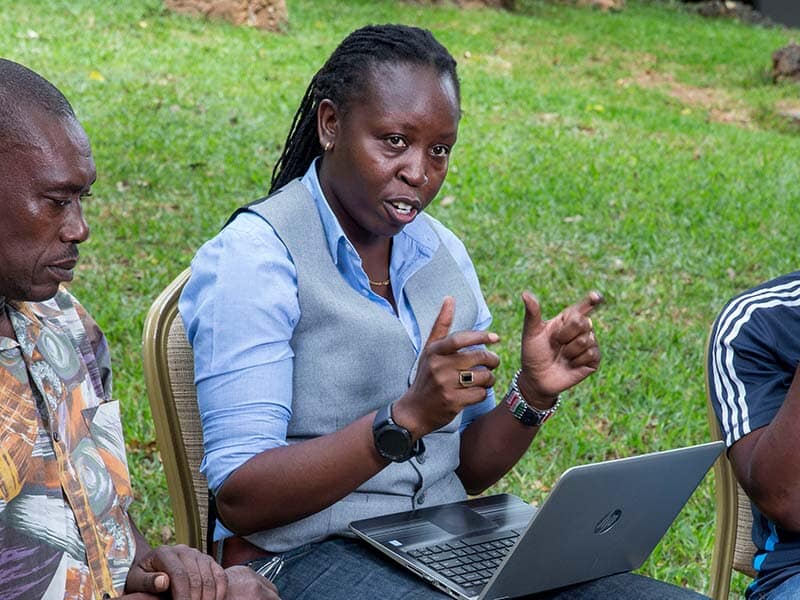
WPI is working to advance gender justice and challenge gender-based discrimination by involving more women and girls in decision-making spaces and ensuring their needs are properly addressed in all spheres of government. “We want to give women and girls voice and autonomy,” said WPI Deputy Executive Director Rose Wakikona. “At the core of our work is the need to push for that power so they can determine how their lives should look, what should happen to their bodies, how they should spend their finances, and where they should be able to lend their voices.”
Not only are women and girls vulnerable to violence, but they are also discouraged from speaking up, expected to cede authority to their father, husband, or son. Women are seen as powerless, weak, and in need of protection and supervision. Girls are often funneled into early marriage as soon as they start menstruating. Additionally, women are often barred from decision-making, including over their family finances, despite working and being financial contributors.
“They earn the money but oftentimes they don’t have the decision-making power of how that money is spent,” Wakikona explained. “So they’ll go to the garden, they’ll dig, and after harvesting, the money will be handed over to the man who then decides how the resources are spent in the home.”
To shift Ugandan culture and law, WPI takes on public interest legal cases such as fighting against polygamy and abusive medical practices; legal and political advocacy in support of women’s equality and rights; and pro-bono work for individual women and girls. Last year they worked on more than 500 pro-bono cases on issues such as divorce, succession, and land to help protect women in court.
WPI also represents girls under age 18 who are expelled from school after becoming pregnant. Many of these girls have been raped or forced into teen and child marriages. The law firm won judgments forcing schools to let pregnant girls continue their education and has elevated this issue from local and regional courts up to the Ugandan Human Rights Commission and even the United Nations Committee on the Status of Women.
“We provide women and girls an avenue to get legal help. Because of our patriarchal system, women don’t often control resources. And often we are going against people who have resources and money,” Wakikona said. “We have gone against some of the best law firms in this country just to be able to protect the rights of women and girls. We ensure that the most vulnerable in society can get the legal representation that they need.”
Nasha eventually found WPI with the help of her neighbor. She had stayed with her abusive relative for eight months before she was able to escape. WPI took her to a shelter and helped secure the arrest of her relative. And she is now back in school.
“I hope to go to university and become a lawyer,” Nasha said, “so that I can help girls like me.”
*Name changed to protect her identity