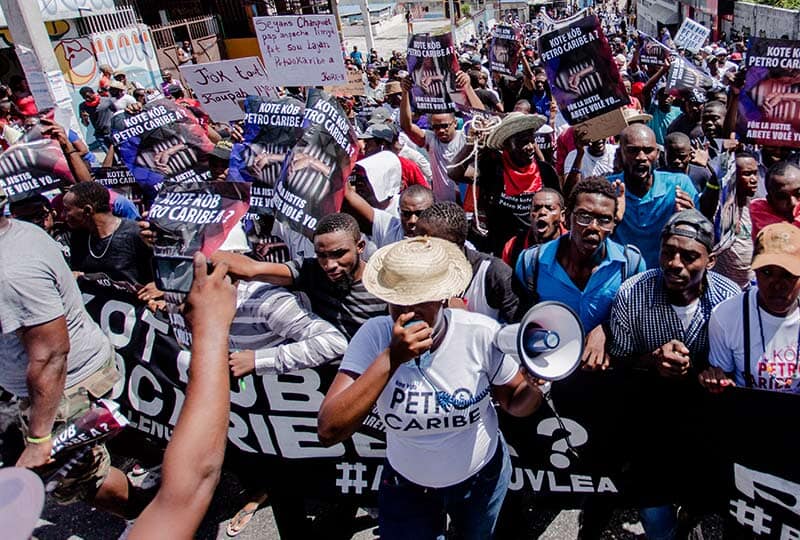
As the transition government’s term expires, Haitians want to set up conditions for real change.
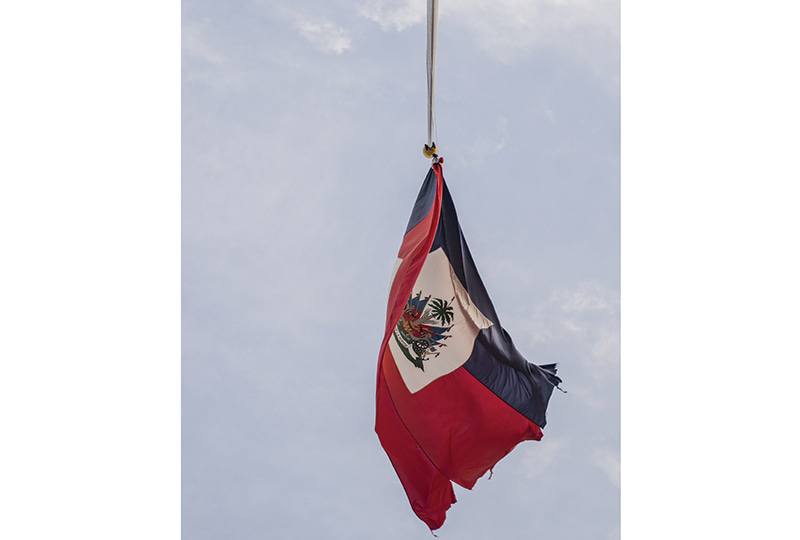
The term of the current transition government expires on February 7, 2026. The international community and the Haitian elites are already negotiating who will govern next. But there is a great gap between their conversation and the concerns of most Haitians.
Most people I know want whoever is in government to focus on a plan to make life in Haiti livable. We want to create mechanisms to prosecute criminally affiliated officials and business leaders, and remove them from positions of power so they can no longer protect one another or sponsor gangs. We want the government to undergo vetting so that state agencies can function; stabilize the economy so that people can make a living; and rebuild the justice system so that those responsible for Haiti’s catastrophe can be prosecuted. We want leaders who will end criminality in public life.
The Gang Suppression Force recently approved by the UN Security Council may reduce gang violence, but will not fix any of these core problems.
So it’s time to talk about what Haiti actually needs, and how the three options on the table for governance and security—keeping the existing transition government, operating with a solo prime minister, or naming a Supreme Court judge or judges to lead the transition—entirely miss the mark.
What Haiti actually needs now.
It is possible to resolve Haiti’s crisis—but it requires the international community to correctly identify and target the core problem: criminal networks have taken over every sphere of public life. Criminality is not just gang violence; criminal groups have infiltrated the justice system, the police, the army, the economy, the media, and even parts of civil society—and they are often tied to political and economic elites.
International sanctions against Haitian officials show the ubiquity of government ties to gangs, corruption and drug and arms trafficking: The United States and Canada have sanctioned two recent Haitian presidents, three prime ministers, and several cabinet ministers, as well as senators, members of parliament, and agency directors.
The question is not which set of politicians should lead Haiti to elections—the whole political class has collapsed and officials have consistently proven themselves incapable of addressing the country’s problems.
Haiti needs a new transition government guided by key principles and transparent processes toward clear outcomes. The leaders must not be tied to political parties, which are all embroiled in a corrupt system. They must not stand to benefit personally from their office. While the justice system is paralyzed and incapable of convicting officials, anyone investigated by a judge or state anti-corruption agency or sanctioned internationally on suspicion of criminal activities should be precluded from holding office.
I will leave it to other authors to elaborate the details of how such a transition government could be installed in February—that is another complex conversation. My point is that any government should focus on disrupting criminality in public life. If they fail to do that, they have failed.
The international community and Haitian elites have repeatedly failed to solve the crisis because they ignore that core problem. They must rethink their approach.
Here are specific mechanisms that could define a credible transition.
- Accountability. Create oversight mechanisms for the police, the judiciary, the army, and other government institutions—full vetting investigations of these agencies would be a first step. Create a mechanism to fire officials implicated in corruption and criminality.
- Truth. Create an international commission to investigate the major crimes of the past 15 years, including the PetroCaribe corruption scandal involving the loss of billions of dollars of public funds; gang massacres; and drug and arms trafficking. Investigations will prioritize identifying government officials implicated in these crimes.
- Justice. Establish an independent court with specialized chambers for financial and drug and arms trafficking crimes. The goal is to extract the state from criminal networks, including drug and arms trafficking and gang networks.
- Reparations. Channel stolen and extorted assets into an independent reparations fund. Offer financial, social, and psychological support to victims. Rebuild infrastructure destroyed by gangs. Collaborate with members of marginalized communities to make long-term investments that rectify inequalities in Haiti. This process will initiate a long- overdue process for dialogue among Haitians about solving our structural inequality.
The international community should listen to what we need, and support what we propose. These are real solutions for Haiti.
Instead, here is what is on the table.
1. Extending the mandate of the transition government.
One proposal is to simply keep the current transition presidential council, known as the CPT (the Conseil Présidentiel de Transition in French), in power longer.
But the CPT has failed to meet the goals outlined in its founding accord. It has not restored security, made Constitutional and institutional reforms, or conducted elections. Furthermore, it has not presented a clear plan to address security, or marshalled the massive state funding and resources any serious security plan would require.
Under the CPT, thousands of Haitians have been killed, and the number of displaced people tripled in 2024 to over one million. Half of Haitians are hungry, and less than a third of hospitals in Haiti are operating. Gangs have taken over more territory in the capital, as well as in areas such as Artibonite and Mirebalais. The UN now reports that Haiti is one of the top five crises in the world.
Meanwhile, three of the nine members of the CPT were summoned to appear in court on bribery charges. The National Human Rights Defense Network in Haiti reported on massive overspending among all the CPT members—each one receives, on top of their salary, about $76,000 a month in perks, totaling $684,000 for nine members, in a country where more than a third of the population gets by each month on less than $83.
2. A solo prime minister without any president or presidential council.
Some are proposing that a prime minister govern alone, without a president or presidential council. But that would consolidate power in the hands of one unelected official, without any checks and balances or input from civil society. It would reproduce the same concentration of authority that has in the past enabled corruption and criminal capture of the state.
To confront criminal networks alone, the prime minister would need to be clean, neutral and independent of political party, criminal, or business interests, as well as responsive to Haitians’ needs. Without external oversight and civil society participation, the option of a solo prime minister risks reinforcing criminality.
Shrinking the transition government to one person does not solve some of its most salient problems: its potential for internal corruption, its inability to represent Haitians, and its lack of will to confront criminality.
3. Appointing a Supreme Court justice to lead the government.
Haiti’s 1987 Constitution called for a Supreme Court judge to lead the government if the president was unable, and Haiti had two previous internationally supported transition governments led by a Supreme Court judge. But the Constitution was amended in 2011 and eliminated that provision.
In any case, the current Supreme Court is entirely illegitimate and tied to the corrupt political system. The Constitution requires the president to select each Supreme Court judge from a list of three candidates proposed by the Senate. But recent Haitian heads of state have resorted to direct, extra-Constitutional appointments. Jovenel Moïse fired and personally replaced three judges on the court when the original judges refused to permit him to overstay his term. Ariel Henry, who himself was not appointed legitimately, stacked the court with other judges mostly affiliated with the dominant Parti Haïtien Tèt Kale (PHTK).
Appointing a judge from the Supreme Court to lead Haiti would not be appointing an impartial and neutral arbiter of law—it would more likely empower a highly partisan operative tied to a corrupt system.
These options won’t help.
None of the three options for government under international discussion stand to reduce official corruption and criminality or position the government to vanquish gangs, restore security, or boost institutional capacity and the rule of law. A Gang Suppression Force may reduce violence temporarily, but cannot resolve security problems if the current network of corruption and criminality remains intact.
Haitians have the sense that the international community will, once again, decide Haiti’s government on Haitians’ behalf, permitting officials to continue to collude with criminals for their mutual enrichment while most Haitians struggle to survive.
Haiti needs a different approach.
What now?
Today, even semblances of legitimacy for the existing interim government have frayed. Many members of the transition council have broken ties with the sectors that nominated them to their current positions. They are disconnected from the Haitian people.
The international community has often been part of the problem, but it can be part of the solution. Allies of Haiti should immediately offer political support, technical expertise, and funding for programs for vetting, truth, justice, and reparations—in close collaboration with Haitian civil society leaders working to carve an exit from the criminality that has overtaken the state.
Anything less will only prolong the crisis.
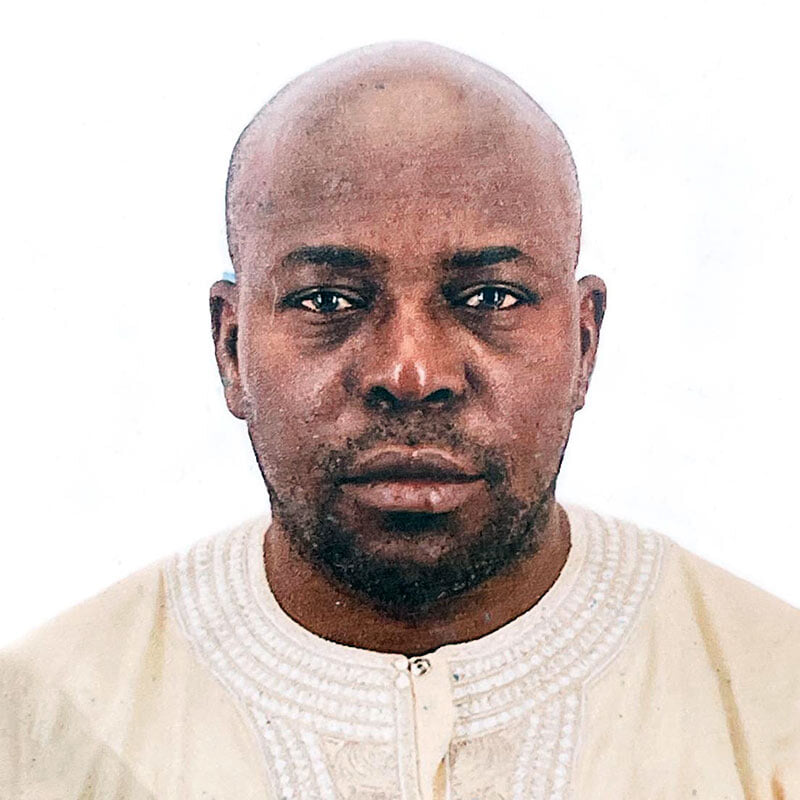 Nixon Boumba is a Haitian social justice activist and human rights expert who leads the American Jewish World Service initiative on Land, Water, and Climate Justice in Haiti.