The Guatemala City office of AJWS grantee Bufete para Pueblas Indígenas (BPI), or the Indigenous Law Firm, may look like most law offices: stacks of client files, a large conference table, bustling energy and coffee and tea perpetually brewing. But at BPI, there is more than meets the eye.
“At other law firms, you’re not going to sit around a table with candles lit and communicate with your ancestors,” says BPI’s founder and executive director Carmela Curup Chajon. “We help communities fight for justice, but we also help them to heal.”
This healing comes from Indigenous Mayan spiritual practices.
“When we take on a case, we hold a ceremony to ask our ancestors for support and wisdom. We ask them to light up our path, to show us the way forward. We must leave behind any doubt, negativity, fear and uncertainty,” says BPI lawyer Olivia Sienchavez. “Just as our ancestors fought against oppression, so must we — and we walk forward with them, knowing our fight is just.”
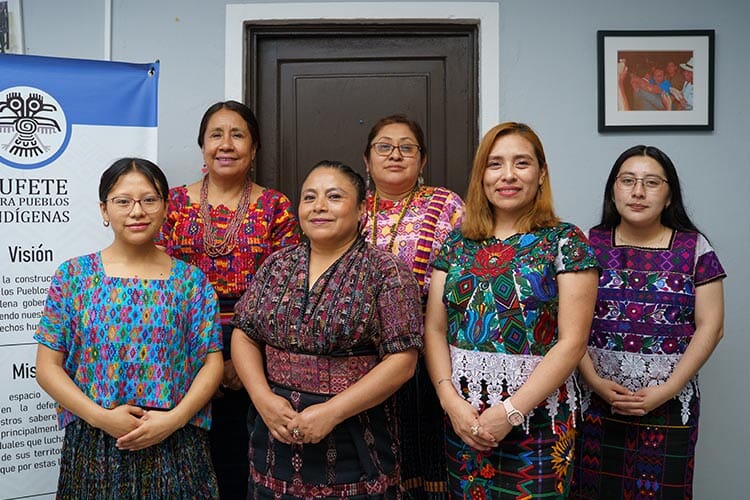
BPI’s two-pronged approach — legal aid, spiritual healing — is what makes them one of the most unique and powerful activist organizations among AJWS’s 500+ partners around the world. Established in 2018, BPI responds to the generational trauma and injustice that Indigenous Peoples in Guatemala have experienced since their land was invaded and colonized by the Spanish hundreds of years ago. This persecution exploded into an armed conflict between 1960 and 1996, when Guatemala’s military killed more than 200,000 rural and Indigenous people, and disappeared more than 50,000. Today, this oppression is less overt, but still extremely harmful: Indigenous communities remain wildly underfunded and resourced by the government, and their land, water and natural resources are regularly stolen and polluted by local and international industries.
Led by a small, mighty team of Indigenous women, BPI refuses to pass this trauma to another generation. And thanks, in part, to funding from AJWS, their clients — most often poor, rural farmers — pay nothing.
“The Indigenous communities we work with are born into a state that is structurally racist — and there is so much mistrust of the legal system,” says Olivia. “So when they see us in our Indigenous, traditional clothing, speaking our Indigenous languages, their anxieties are calmed. They know we’ve struggled like them. And we help them heal their legal struggles along with their spiritual pain.”
Calmed anxieties were obvious in February, 2025, when the BPI team met with eight people representing the Kaqchikel Maya Indigenous community of San Juan Sacatapequez, a town west of Guatemala City, but the sense of injustice was staggering. Nearly 20 years ago, the community was forced off their ancestral land by a cement company. Tensions between the Indigenous community and municipal leaders have remained. In 2024, the town’s mayor denied the Indigenous community their right to elect their own leadership, and installed his own loyalists — who unceremoniously shut down the community’s shared well. When Indigenous leaders demanded he reverse course, they were attacked by local Ladinos (or, Spanish-descendent Guatemalans).
“To the state, we are invisible. Without BPI, we would have no hope of justice being served,” said community member Geronimo Sec. “But this law firm sees our struggle and respects our dignity.”
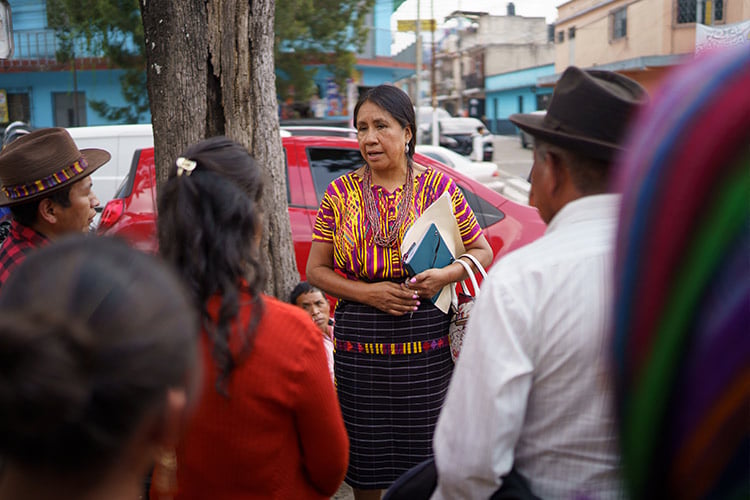
When they visited BPI, they’d been without clean water for months — and multiple Indigenous women were still nursing head injuries. BPI is representing the community in an ongoing lawsuit that will force the town’s mayor to respect the community’s rights to water, but on that day in February, the women wished to add testimony about the attack to their case. When they arrived at the proper office to testify, they were told the case files were in a different region.
“This is how it works,” said Olivia, her arm around one of the injured women. “Cases of violence against Indigenous women are rarely prosecuted. It’s a way to wear us down, over months and years. But we’ll keep at it. We’ll follow up. This is not the end.”
The group was visibly shaken. It was time for spiritual healing. The whole group decamped in an ‘archeological park,’ a small, quiet park where Indigenous Peoples in Guatemala City perform ceremonies and pray: for the health of a new baby, or for financial success, or to cleanse negative energy after a demeaning encounter with Guatemala’s legal system.
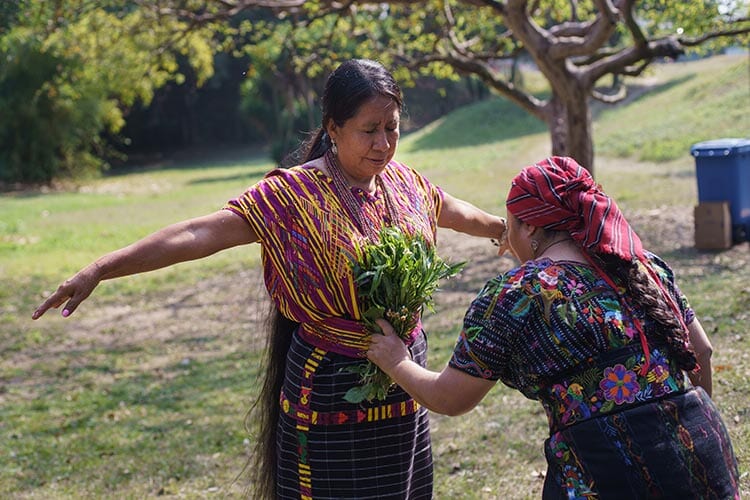
BPI’s spiritual leader and sociologist, Emilia Cosigua Sicajau, welcomed each of the eight community members to breathe in the scent of aromatic herbs — basil, rosemary, chamomile and more — and release. Reciting prayers in Kaqchikel, she cleansed the space around them and fortified them for the fight ahead.
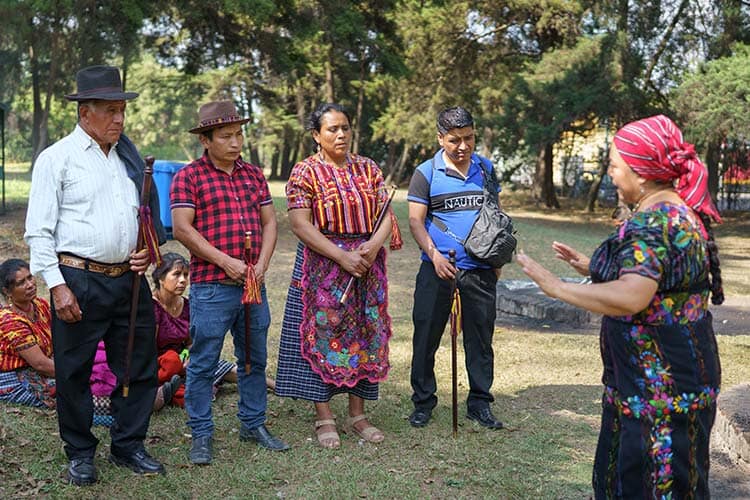
“We believe that violence stays in your system and affects your energy,” explained Olivia. “We do this ceremony to clear out the negativity of this injustice, to process this violence and trauma.”
BPI knows they fight an uphill battle that has been waged for centuries. But by empowering Indigenous Peoples to believe that they deserve justice — even when the roadblocks seem endless — they are healing generational trauma.
“We tell our clients: When you enter the court, don’t look at your feet. Don’t look at the sky. Stare that judge in the face and speak your truth,” said Olivia. “Force that judge to understand not only that you are right and your cause is just — but that you are a human with dignity.”